




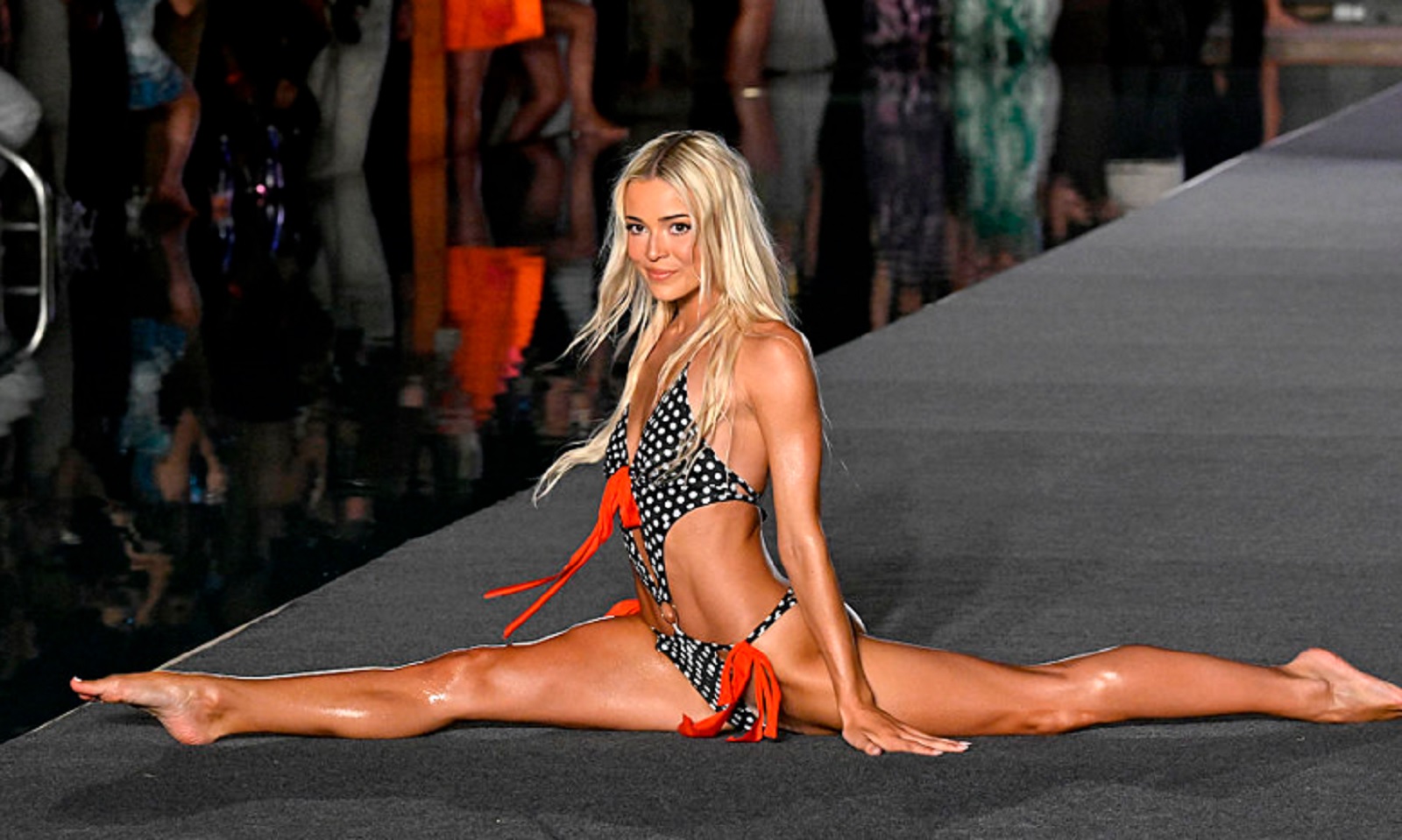
Olivia “Livvy” Dunne, a well-known gymnast and social media personality, recently expressed her dissatisfaction after being unable to buy an apartment that was once the residence of the legendary baseball figure Babe Ruth. This incident has captured public attention not just because of the historical importance of the property, but also due to Dunne’s increasing fame and her new venture into the real estate market.
Dunne, celebrated for her success in sports and her significant online audience, shared in an open interview that she had a strong interest in obtaining the apartment, which is significant in the realm of sports history. This property, linked to one of baseball’s legendary icons, represents both opulence and a rich legacy, appealing to collectors and admirers. Nevertheless, despite her eagerness and willingness to finalize the deal, Dunne stated she was “refused” the chance to acquire the esteemed residence.
The apartment in question, reportedly located in New York City, has long been linked to Babe Ruth, whose contributions to baseball remain legendary nearly a century after his prime. The idea of living in a space once inhabited by such an iconic sports figure resonated with Dunne, who herself has become a prominent figure in the world of athletics. The rejection, she said, was unexpected and disappointing, especially given her admiration for sports history and her genuine interest in the property’s legacy.
While the exact reasons for the rejection have not been disclosed to the public, Dunne’s announcement has led to conjecture regarding the standards and factors at play in prominent property deals. In competitive places such as New York, upscale estates often require rigorous screening processes, which may include checks on background, financial evaluations, and board consent, particularly in co-op buildings or elite condo areas. Even famous individuals and public personas might encounter intricate and occasionally unclear processes when trying to acquire esteemed real estate.
Dunne’s attempt to acquire the apartment reflects a broader trend of athletes and influencers investing in real estate as a way to diversify their portfolios and establish long-term financial security. With her growing success both in gymnastics and as a media personality, Dunne represents a new generation of sports figures leveraging their fame into entrepreneurial ventures, including property ownership. The story of her denied purchase serves as a reminder that celebrity status does not always guarantee access to historic or high-value real estate, where other factors often weigh heavily in decision-making processes.
Her candid comments about the experience have resonated with fans, many of whom expressed sympathy and surprise. For some, the idea that even a high-profile personality like Dunne could face barriers in real estate transactions highlights the exclusivity and complexity of the luxury property market. It also underscores the continued allure of properties tied to historic figures, where ownership can carry significant cultural and emotional weight.
Babe Ruth’s influence extends significantly beyond just athletics to become a staple of mainstream culture. Renowned as the “Sultan of Swat,” his influence on the game of baseball revolutionized it and fascinated the American populace in the early 1900s. Locations linked to him are seen as valuable Americana artifacts, combining stylistic elegance with historic importance. The concept of a contemporary athlete such as Dunne desiring to reside in such a place weaves an intriguing story connecting eras of athletic brilliance.
Dunne’s own career trajectory has been remarkable. From her early days in gymnastics to her rise as one of the most followed collegiate athletes on social media, she has successfully combined sportsmanship with media savvy. Her influence extends beyond the gym, with endorsement deals, brand partnerships, and an ever-expanding public profile. For someone like Dunne, owning a residence with a link to Babe Ruth could have symbolized not only personal success but also a shared connection through sports history.
The incident also shines a light on the unique challenges public figures face when making high-profile purchases. While visibility and wealth can open many doors, they can also attract scrutiny and complicated vetting processes. Sellers or boards associated with historic or prestigious properties may have concerns about publicity, lifestyle compatibility, or community dynamics, all of which can influence decisions that go beyond financial capacity.
For Dunne, the experience may serve as a learning moment in her growing journey as an athlete and entrepreneur. While she did not secure the apartment, her openness about the situation has added another layer to her public persona—one marked by ambition, relatability, and resilience. In sharing her disappointment, she has connected with fans on a personal level, showing that setbacks can happen to anyone, regardless of status.
The broader fascination with celebrity real estate stories continues to capture public attention, as fans and observers remain intrigued by the intersection of fame, wealth, and iconic properties. Homes and apartments with storied pasts often attract interest not only for their architectural features but also for the narratives they carry. In this case, the combination of a young, successful athlete and the home of a sports legend offered a compelling, albeit unfulfilled, story.
While Dunne may have missed the opportunity to call Babe Ruth’s former apartment her own, her ambitions in both sports and business show no sign of slowing. Her ability to navigate public and private challenges alike will likely serve her well as she continues to build her career and explore new ventures.
As the real estate market remains dynamic and competitive, stories like this highlight the human side of transactions that often seem driven solely by numbers and celebrity clout. They remind us that behind every property lies a web of history, emotion, and aspiration, and that sometimes, even the most determined buyers must face disappointment.
Dunne’s supporters keep following her advancing career with enthusiasm, motivated by her determination and openness in sharing her successes and obstacles. Her tale, though focused on a lost chance, mirrors the wider experience of numerous young achievers as they traverse the realms of celebrity, finance, and self-improvement.
As she moves forward, the lessons from this experience may well shape her future endeavors, both in the realm of real estate and beyond. And while Babe Ruth’s former apartment remains out of reach for now, Dunne’s future is full of potential and promise, with many more milestones on the horizon.