
Our website uses cookies to enhance and personalize your experience and to display advertisements (if any). Our website may also include third party cookies such as Google Adsense, Google Analytics, Youtube. By using the website, you consent to the use of cookies. We have updated our Privacy Policy. Please click the button to view our Privacy Policy.

Social Responsibility

10 mining operations halted by sustained public resistance and legal challenges

10 mining operations halted by sustained public resistance and legal challenges

Introduction: When Public Pressure Reshapes the Extractive IndustryFor generations, large-scale extraction operations and mining ventures have been linked to wealth generation, employment opportunities, and resource reliability. Nonetheless, these same undertakings bring about significant ecological, societal, and wellness impacts. Throughout recent decades, coordinated civic pressure driven by grassroots initiatives, Indigenous opposition, judicial battles, scientific advocacy, and worldwide campaigns has successfully forced the shutdown of numerous prominent extraction zones and mines.These closures demonstrate the growing influence of civil society in shaping environmental governance. Below are ten significant mines and extraction projects that were shut down, suspended, or permanently halted due largely to…
Read More
CSR strategies transforming workplace safety and sustainability in Malaysia

CSR strategies transforming workplace safety and sustainability in Malaysia

Overview: CSR shaping workplace safety and manufacturing sustainability in MalaysiaMalaysia’s manufacturing sector — accounting for roughly one-fifth to one-quarter of national output — has faced dual pressures over the past decade: maintain competitiveness while meeting rising expectations for worker safety and environmental responsibility. Corporate social responsibility (CSR) programs in Malaysia increasingly link human-centered workplace policies with greener manufacturing practices. This article reviews regulatory drivers, concrete corporate cases, measurable approaches, common tools, outcomes, and persistent challenges, illustrating how CSR is changing workplaces and factories across the country.Regulatory and market driversStrong regulatory frameworks and market incentives have pushed CSR from optional goodwill…
Read More
Perú: RSE que fortalece diálogo comunitario y proyectos de agua en territorios andinos

CSR programs supporting sustainable water management and community engagement in Peru’s Andean regions

Peru: CSR Strengthening Community Dialogue and Water Projects in Andean TerritoriesPeru’s Andean highlands present a paradox: rich ecosystems and cultural heritage, yet widespread vulnerability in water access and governance. Rapid glacier retreat, seasonal variability, and uneven infrastructure mean that many rural Andean communities face intermittent supply, water quality risks, and competing claims between agriculture, human consumption, and extractive industries. Corporate social responsibility, when designed and implemented responsibly, can strengthen community dialogue and deliver water infrastructure and watershed protection that are technically sound, socially legitimate, and resilient to climate change.Background: water scarcity in Andean regionsThree concurrent pressures impact water systems across…
Read More
The 10 Industrial Disasters That Forced Changes in Environmental Regulation

The role of industrial disasters in strengthening environmental accountability

Industrial disasters have repeatedly exposed the hidden costs of rapid economic growth and technological expansion. When regulatory systems lag behind industrial innovation, catastrophic accidents often become the turning points that reshape environmental law. Across continents and decades, large-scale environmental disasters have triggered sweeping reforms, stricter oversight, and global cooperation. The following ten events stand out as pivotal moments that forced governments to strengthen environmental regulation and corporate accountability.1. The Great Smog of London (1952)In December 1952, a thick blanket of smog shrouded London over the course of five days. Triggered chiefly by coal combustion coupled with atypical meteorological patterns, this…
Read More
Uruguay: CSR cases advancing renewables and inclusive quality jobs

How public policy in Uruguay supports CSR and renewable energy growth

Uruguay is widely cited as a model for rapid decarbonization of power supply: driven by a mix of hydropower, wind, biomass and solar, the country moved from a historically fossil-dependent grid to one that routinely supplies more than 90% of electricity from renewable sources. This national energy transition created a space in which corporate social responsibility (CSR) evolved beyond philanthropy into strategic investments that link renewables, local development and inclusive quality jobs.Policy and finance enablers that shape CSRStrong public policy and predictable procurement shaped corporate behavior and CSR outcomes:Competitive renewable auctions: Government-organized auctions reduced market risk for developers and required,…
Read More
Nauru: CSR cases promoting recycling and environmental education on small islands

Overcoming landfill and waste management limits with CSR in Nauru

Small island states such as Nauru face distinctive environmental pressures: limited land area, finite landfill space, high dependence on imported packaged goods, fragile coastal ecosystems, and climate change impacts. Corporate social responsibility (CSR) programs that combine recycling systems with environmental education can reduce waste, create livelihoods, and build long-term community resilience. Effective CSR on islands must reflect scale, logistical constraints, and cultural context while delivering measurable environmental and social returns.Context: The limitations and prospects facing NauruScale and population: Nauru is one of the world’s smallest republics by land area and population, which concentrates both pressures and the opportunity for high…
Read More
Mexico: CSR cases supporting local suppliers and reducing urban waste

How CSR in Mexico supports local suppliers while tackling urban waste

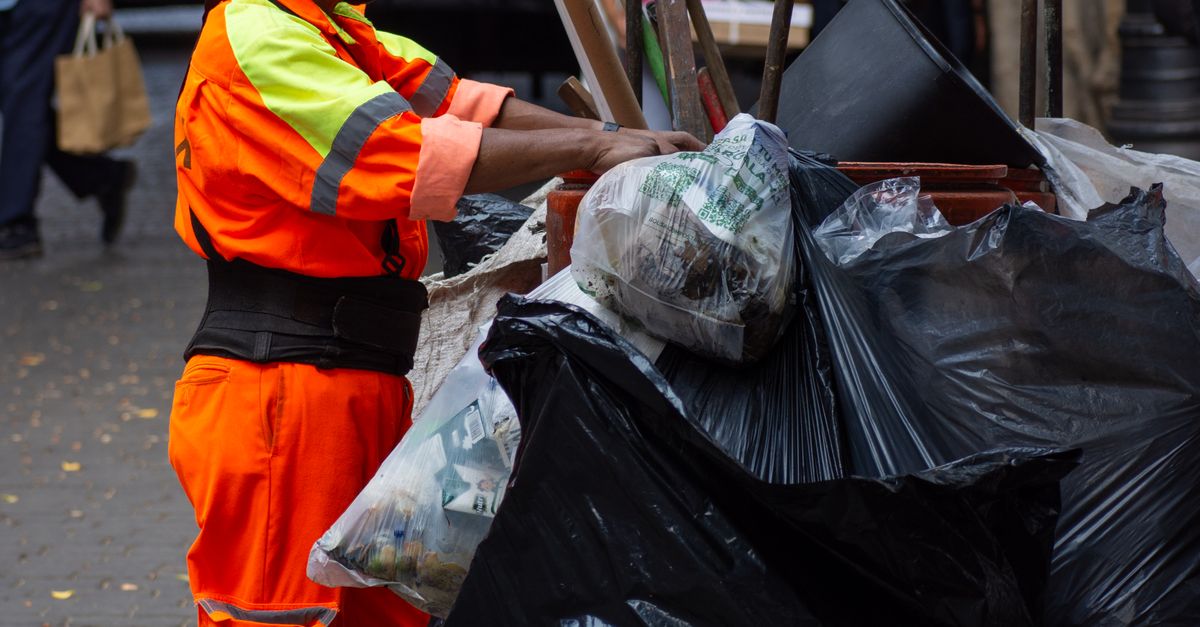
Mexico confronts two intertwined sustainability issues: an overwhelming stream of urban waste and the imperative to boost the competitiveness of local suppliers. Large metropolitan areas produce millions of tons of municipal solid waste every year, yet recycling rates for residential and commercial refuse remain below 10% across many locales, with informal waste-picking still contributing significantly to material recovery. Meanwhile, small and medium suppliers—including farmers, processors, workshops, and logistics operators—frequently struggle to access formal procurement networks, financing, or the quality-assurance resources needed to integrate into major corporate supply chains.Corporate social responsibility (CSR) programs in Mexico are increasingly addressing both problems together:…
Read More
Mexico: CSR cases supporting local suppliers and reducing urban waste

Mexico’s CSR strategies for local supplier growth and waste management

Mexico faces two intersecting sustainability challenges: a high volume of urban waste and a need to strengthen the competitiveness of local suppliers. Major urban centers generate millions of tons of municipal solid waste each year; recycling rates for household and commercial waste remain under 10% in many regions, and informal waste-picking plays a substantial role in material recovery. At the same time, small and medium suppliers—farmers, processors, workshops, and logistics providers—often lack access to formal procurement channels, financing, or quality-assurance support required to enter large corporate supply chains.Corporate social responsibility (CSR) programs in Mexico are increasingly addressing both problems together:…
Read More
¿Cómo manejar la altura al visitar Ciudad de México y otras ciudades del altiplano?

Mexico’s sustainable CSR models for local suppliers and waste reduction

Mexico confronts two intertwined sustainability issues: an overwhelming stream of urban waste and the imperative to boost the competitiveness of local suppliers. Large metropolitan areas produce millions of tons of municipal solid waste every year, yet recycling rates for residential and commercial refuse remain below 10% across many locales, with informal waste-picking still contributing significantly to material recovery. Meanwhile, small and medium suppliers—including farmers, processors, workshops, and logistics operators—frequently struggle to access formal procurement networks, financing, or the quality-assurance resources needed to integrate into major corporate supply chains.Corporate social responsibility (CSR) programs in Mexico are increasingly addressing both problems together:…
Read More
Greece: CSR supporting heritage recovery and the social economy on islands

Addressing economic vulnerability on Greek islands with CSR and cultural heritage projects

Greece’s islands blend remarkable cultural and natural heritage with pronounced economic fragility, as nearly 200–250 of them remain permanently inhabited and feature historic settlements, archaeological landmarks, traditional architecture, and living customs that shape local identity and fuel national tourism. Yet these islands also contend with shrinking populations, seasonal job patterns, constrained public funding, and climate-driven threats. Corporate social responsibility (CSR) can therefore become essential in supporting heritage restoration and reinforcing the social economy that underpins island communities throughout the entire year.Why CSR matters for heritage recovery and the social economyFunding gap. Public resources for restoration and maintenance are limited; CSR…
Read More