

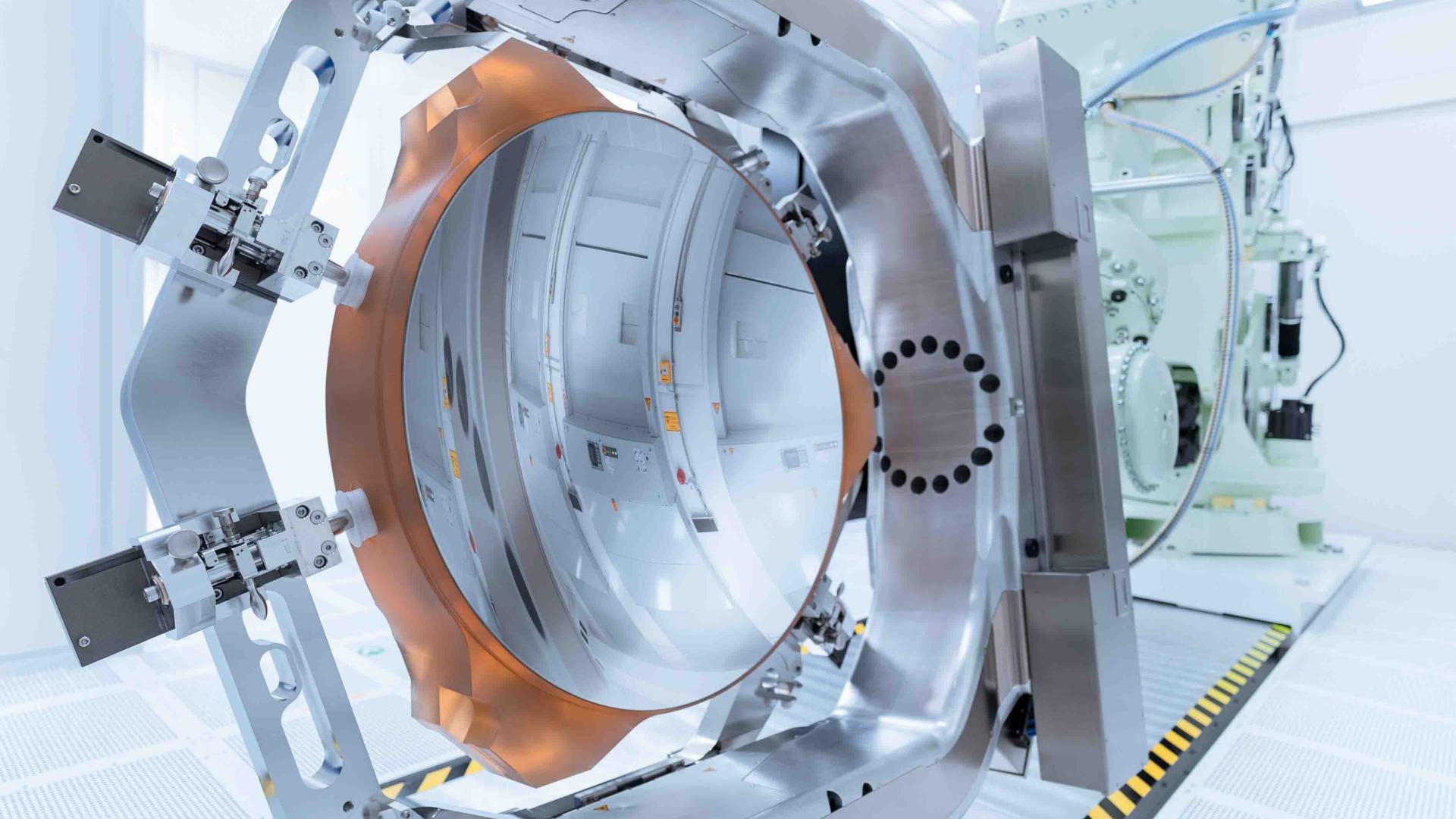
Extreme Ultraviolet lithography, commonly known as EUV lithography, is the most critical manufacturing technology enabling the continued scaling of semiconductor process nodes below 7 nanometers. By using light with a wavelength of 13.5 nanometers, EUV allows chipmakers to print extremely small and dense circuit patterns that were not economically or physically feasible with previous deep ultraviolet techniques. As the semiconductor industry pushes toward 3 nanometers, 2 nanometers, and beyond, EUV lithography is evolving rapidly to meet unprecedented technical and economic demands.
From First-Generation EUV to High-Volume Manufacturing
Early EUV systems functioned mainly as research platforms, restricted by weak light source output, short operational cycles, and intricate mask management, while over the last decade EUV has evolved into a robust high-volume manufacturing technology adopted by leading foundries and integrated device manufacturers, with current EUV scanners delivering production-grade reliability capable of processing thousands of wafers per day.
Several pivotal enhancements made this shift possible, including:
- Increased EUV source power, moving from below 50 watts in early tools to over 250 watts in production systems
- Improved collector mirrors that efficiently direct EUV photons toward the wafer
- Advanced vacuum systems to prevent EUV light absorption by air
- Better photoresists optimized for EUV wavelengths
These advances allowed EUV to replace complex multi-patterning steps used in older lithography, significantly reducing process complexity and defect risk.
Single-Exposure Patterning and Reduced Complexity
EUV lithography’s most notable benefit lies in its capacity to achieve single‑exposure patterning for features that once depended on double or even quadruple patterning, and at the 7‑nanometer node and smaller, deep ultraviolet lithography relied on several precisely aligned exposures, which drove up costs, prolonged cycle times, and increased the risk of yield loss.
EUV streamlines the manufacturing process by:
- Reducing the number of masks per layer
- Lowering overlay error between patterns
- Shortening overall process flows
- Improving pattern fidelity for dense logic structures
This streamlining becomes crucial as process nodes become smaller, since even tiny misalignments may trigger functional breakdowns at near‑atomic scales.
High Numerical Aperture EUV and the route forward past the 2-nanometer frontier
As conventional EUV reaches its practical resolution threshold, the industry is rolling out High Numerical Aperture EUV, commonly known as High-NA EUV, where the numerical aperture defines how precisely a lithography tool can concentrate light, and increasing it directly enhances imaging resolution.
High-NA EUV systems increase numerical aperture from 0.33 to approximately 0.55, enabling:
- Reduced minimum feature dimensions achieved without extensive pattern fragmentation
- Enhanced precision in edge positioning
- More effective scaling of key layers such as the gate and metal interconnect structures
These platforms feature greater physical dimensions and heightened complexity, demanding fresh optical architectures, stricter vibration management, and overhauled fabrication facilities. Even so, they remain crucial for achieving process nodes at 2 nanometers and below while preserving yields that stay economically sustainable.
Advances in EUV Photoresists and Materials
Photoresists play a decisive role in how effectively EUV patterns can be transferred onto silicon. Traditional chemically amplified resists struggle with the tradeoff between resolution, line edge roughness, and sensitivity at EUV wavelengths.
To tackle this issue, material suppliers are creating:
- Metal-oxide-based resists with higher absorption efficiency
- Improved chemically amplified resists with reduced stochastic defects
- Novel underlayer materials that improve pattern contrast
Minimizing stochastic phenomena, including unpredictable micro-bridges or fractures, becomes crucial at advanced nodes, since even one defect may influence transistor performance or overall yield.
Advances in Mask Technology and Defect Management
EUV masks differ drastically from conventional photomasks, using reflective multilayer stacks rather than transparent glass, and their extreme defect sensitivity means even minor flaws may be transferred straight onto wafers.
The latest advancements encompass:
- Improved multilayer deposition techniques to reduce native defects
- Advanced actinic inspection tools that inspect masks using EUV light
- Pellicles that protect masks while remaining transparent to EUV radiation
Pellicle technology has been particularly challenging due to the need for extreme thinness and thermal durability under high-power EUV exposure. Progress in this area has significantly improved mask lifetime and yield stability.
Co-Optimizing Design and Computational Lithography
EUV lithography’s progression extends beyond hardware, as computational lithography and design technology co-optimization grow ever more vital for advancing to smaller nodes. Sophisticated algorithms are used to model the interaction of EUV light with masks, resists, and the wafer’s surface profile.
These tools make it possible to:
- Refined mask layouts engineered to offset optical aberrations
- Design guidelines crafted to align with the unique capabilities of EUV
- Prompt identification of production risks throughout the chip design process
By coordinating design choices with manufacturing limits, chipmakers can gain the greatest benefit from EUV systems while reducing the need for expensive redesigns.
Economic and Strategic Impact on the Semiconductor Industry
EUV lithography systems represent some of the most expensive manufacturing tools ever built, with individual scanners costing well over one hundred million dollars. Despite this, they are economically justified because they reduce total process steps and enable higher transistor density per wafer.
EUV has evolved into a pivotal technology, shaping:
- Global rivalry within cutting-edge logic production
- Long-range capital deployment plans pursued by foundries
- Supply chain reliance on optical systems, specialized materials, and high-precision components
Gaining access to cutting-edge EUV equipment is increasingly becoming the factor that determines which companies can stay competitive at the forefront of semiconductor technology.
A Wider Look at the Continuing Progress of EUV
EUV lithography is no longer a single breakthrough but an evolving ecosystem of optics, materials, computation, and manufacturing discipline. Each generation of EUV improvements extends the practical limits of Moore’s Law while reshaping how chips are designed and built. As High-NA EUV, advanced resists, and tighter design integration converge, the technology continues to unlock smaller process nodes not by one dramatic leap, but through sustained, coordinated innovation across the entire semiconductor value chain.