

.jpg "How Inversiones AIDES supports buyers through the Cap Cana home-buying process")
.jpg "Guide to buying property in Cap Cana for residents and investors in the Dominican Republic")


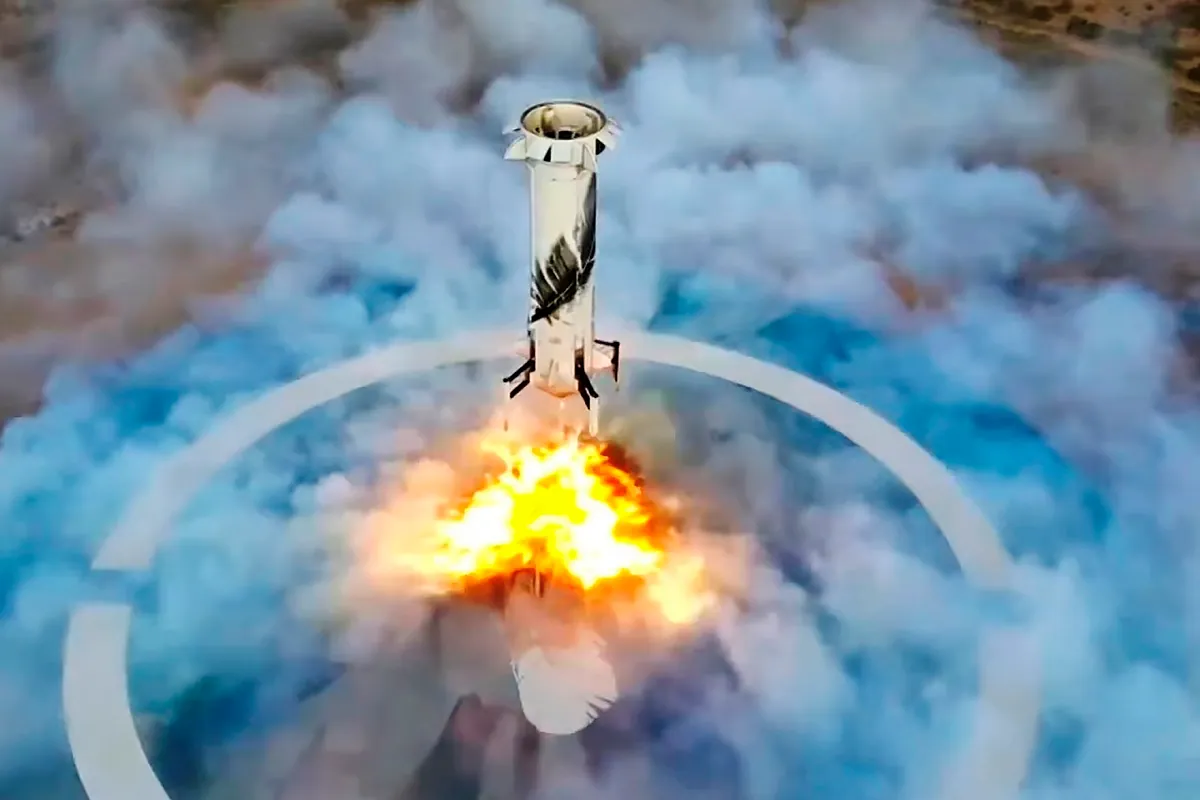
Table of Contents
Blue Origin suffered a major setback after an incident involving its New Glenn rocket during a ground engine test in Florida. The event adds new uncertainty to the company’s ambitious plans for commercial launches, reusable rockets, and future lunar exploration missions.
Blue Origin’s ongoing bid to cement its role as a leading player in today’s space sector faced a fresh setback when a New Glenn rocket suffered a severe malfunction during a hotfire test at Cape Canaveral Space Force Station in Florida, an event that unfolded amid standard prelaunch procedures and gained broad visibility after online footage appeared to capture an explosion at the site.
Although the incident unfolded dramatically, company representatives reported that every team member involved in the operation remained unharmed. Blue Origin founder Jeff Bezos later recognized the gravity of what had occurred, while stressing that the company would persist in examining the root cause and restoring any affected infrastructure required to advance future missions.
The anomaly represents another difficult moment for Blue Origin’s flagship orbital launch program, which has already faced multiple technical obstacles since its debut. Although the company has achieved several important milestones with New Glenn, recent failures and delays continue to highlight the enormous complexity of developing reliable heavy-lift launch systems capable of competing in today’s commercial space market.
Investigation begins after launchpad incident
During a static fire trial, often called a hotfire, the rocket’s engines were ignited while the vehicle stayed firmly secured on the launchpad. Such trials are viewed as a vital prelaunch step because they enable engineers to assess engine behavior, fuel systems, and overall flight readiness under controlled conditions.
Witness videos recorded near Cape Canaveral appeared to show a sudden explosion and large fireball engulfing the area surrounding the rocket. The Federal Aviation Administration later confirmed that it was aware of the anomaly but clarified that the test itself did not fall under activities requiring an active FAA launch license.
Authorities also reported that the incident left commercial air traffic unaffected, while military range personnel and engineers from Blue Origin started working together to identify the cause of the malfunction and evaluate how extensive the damage was.
The US Space Force characterized this kind of developmental testing as inherently high‑risk, noting that it relies on emerging technologies and prototype systems pushed to their limits under extreme conditions, where rocket test environments subject components to immense pressure, searing temperatures, and unstable fuel mixtures, so even slight defects can rapidly trigger disastrous breakdowns.
Blue Origin additionally warned nearby residents and beachgoers that debris connected to the incident could potentially wash ashore in the coming days. The company advised the public not to approach or handle any materials that may be discovered for safety reasons.
At this point, investigators have not yet disclosed any conclusive explanation for the anomaly, and engineers will likely devote several weeks to analyzing telemetry, inspecting the equipment, and piecing together the chain of events that culminated in the explosion.
The intricate journey of New Glenn toward reaching orbit
Blue Origin increasingly places the New Glenn rocket at the heart of its long-range commercial spaceflight plans, and the launcher, named after astronaut John Glenn, was conceived as a reusable heavy-lift vehicle engineered to deliver satellites, scientific missions, and potentially human crews into orbit.
The rocket’s first orbital mission in early 2025 marked an important achievement for the company. Although Blue Origin successfully launched the vehicle into space, it failed to recover the reusable first-stage booster during the return attempt. Executives later explained that engine reignition issues prevented the booster from landing safely on the recovery platform positioned at sea.
Even with that setback, the debut mission demonstrated that Blue Origin could finally operate an orbital-class launch system after years of development delays. The company spent months refining the rocket and improving recovery systems before the second mission later achieved a more successful outcome.
During that subsequent flight, the booster reportedly landed safely, while the mission also delivered a major NASA payload connected to Mars exploration. The successful landing represented a critical milestone because reusability remains one of the most important cost-saving strategies in the launch industry.
Recovering and refurbishing boosters allows companies to reuse expensive rocket hardware rather than discarding it after each mission. SpaceX has built much of its commercial dominance on this model through the repeated reuse of Falcon 9 boosters, dramatically lowering launch costs and increasing flight frequency.
Blue Origin anticipates that New Glenn will ultimately reach comparable operational efficiency, yet the rocket’s development has continued to face setbacks, among them problems that arose during its third launch earlier this year.
The mission managed to retrieve the booster, yet the upper stage was unable to place its payload — a communications satellite owned by AST SpaceMobile — into the planned orbit, and company leaders later explained that one of the engines driving the second-stage burn failed to produce sufficient thrust to finish the maneuver.
Although booster recovery was celebrated as a technical accomplishment, the inability to place the customer’s satellite into orbit represented a serious mission failure. Commercial launch providers operate in an intensely competitive environment where reliability is essential for maintaining customer confidence.
Competition in the commercial space race
The New Glenn program is viewed as Blue Origin’s best opportunity to compete directly with SpaceX in the rapidly expanding launch industry. Over the past decade, SpaceX transformed the economics of spaceflight through reusable rockets, high launch cadence, and aggressive technological development.
Blue Origin has typically pursued development at a more deliberate, methodical pace, placing strong emphasis on engineering dependability and building long-term infrastructure, although the company has also drawn criticism for its slower timelines and fewer operational launches relative to its rivals.
The commercial launch sector has gained major relevance as governments, telecom operators, and private firms pour substantial resources into satellite constellations and orbital infrastructure, and Blue Origin intended for New Glenn to support an extensive array of missions, among them deployments associated with Amazon’s broadband satellite network.
The company’s fourth New Glenn mission was expected to carry dozens of satellites intended to expand Amazon’s low-Earth orbit internet network. Those satellites are part of a larger effort to compete with SpaceX’s Starlink system, which already operates thousands of spacecraft in orbit.
A setback extended by the recent launchpad anomaly may disrupt upcoming deployment plans and strain commercial partnerships, as satellite operators depend on reliable launch windows and recurring technical issues can sway their choice of launch providers.
At the same time, the heavy-lift launch sector remains one of the most technically demanding areas of aerospace engineering. Many companies attempting to develop large reusable rockets have faced explosions, failed tests, and expensive redesigns before achieving operational success.
SpaceX encountered multiple rocket mishaps while advancing its Falcon and Starship vehicles, and industry specialists often emphasize that such setbacks commonly arise during testing when organizations stretch technological limits to achieve reusable spaceflight systems.
Evolving priorities at Blue Origin
Earlier this year, Blue Origin revealed it would place its New Shepard suborbital tourism rocket on an extended operational hold, a move the company explained would free up resources and engineering focus for its lunar exploration initiatives and its more ambitious orbital mission programs.
Since 2021, New Shepard has conducted brief suborbital flights carrying celebrities, tourists, researchers, and paying customers to the edge of space. Those missions became one of the most visible aspects of Blue Origin’s public identity, especially because they featured high-profile passengers and generated significant media attention.
However, the company’s leadership now tends to regard lunar exploration and heavy‑lift launch capabilities as increasingly vital for long‑term strategy, and NASA’s Artemis program, designed to send astronauts back to the Moon, has created fresh openings for private aerospace companies to craft landers and transport solutions for deep‑space operations.
Both Blue Origin and SpaceX currently maintain agreements tied to NASA’s lunar goals, with SpaceX working to reshape its large Starship vehicle into a lunar lander designed to carry astronauts from orbit down to the Moon’s surface, while Blue Origin is creating its own lunar landing system that follows a more classic spacecraft approach reminiscent of the Apollo period.
Both companies have yet to finish the necessary systems, and each program still contends with technical hurdles and timeline setbacks, as SpaceX has seen several Starship test flights end in explosions, while Blue Origin has not yet conducted a test launch for its lunar lander.
NASA officials have acknowledged that delays remain possible for both projects. Government oversight reports have also questioned whether current timelines for human lunar landings are realistic given the technical hurdles still facing both companies.
The recent New Glenn anomaly may add new complications to Blue Origin’s lunar schedule, as the rocket is intended to serve a central role in deploying future lunar hardware and supporting missions, and any prolonged inquiry or redesign could disrupt forthcoming timelines connected to Artemis-related goals.
The mounting demands of the emerging space era
Modern space exploration has entered a period of intense competition driven by both commercial interests and geopolitical concerns. The United States, China, and other nations are investing heavily in lunar exploration, satellite infrastructure, and next-generation launch technologies.
Government leaders now regard space capabilities as vital to economic strength and national security, and launch systems have become indispensable not only for scientific exploration but also for communications, navigation, defense, and surveillance activities.
This wider strategic landscape adds further pressure on companies like Blue Origin and SpaceX to provide dependable systems that can sustain long-term national goals, and NASA officials have consistently stressed the need to preserve multiple commercial partners instead of depending on a lone supplier for upcoming lunar activities.
Transportation Secretary Sean Duffy previously indicated that NASA could potentially accelerate Blue Origin’s role in lunar missions if competing programs encounter delays. His comments reflected growing urgency within the United States to maintain momentum in the international race to establish a sustained human presence on the Moon.
Despite this, aerospace development is still extremely demanding, as creating reusable heavy-lift rockets means confronting some of the toughest engineering hurdles known today, including propulsion and guidance design, heat protection, and the complexities of orbital mechanics.
Failures during testing, though expensive and highly noticeable, are typically seen as an inevitable phase of the development cycle, with engineers treating each irregularity as an opportunity to enhance designs, fine tune procedures, and strengthen future vehicles.
For Blue Origin, the latest incident represents both a technical setback and a critical test of resilience. The company must now determine the cause of the anomaly, repair any damage, and restore confidence in the New Glenn program while continuing to pursue its larger ambitions in orbital transportation and lunar exploration.
Although it remains unclear how long the investigation will take or how significantly schedules may shift, the incident serves as another reminder of the harsh realities of spaceflight. Every advancement in rocket technology carries substantial risk, and even the most well-funded aerospace companies continue facing difficult obstacles on the path toward routine access to space.
As Blue Origin moves forward with its investigation, the company’s ability to recover from this latest setback may play an important role in shaping the future balance of power within the commercial space industry and the next chapter of America’s return to the Moon.