Our website uses cookies to enhance and personalize your experience and to display advertisements (if any). Our website may also include third party cookies such as Google Adsense, Google Analytics, Youtube. By using the website, you consent to the use of cookies. We have updated our Privacy Policy. Please click the button to view our Privacy Policy.

International

Why protectionism returns during uncertain times

Protectionism’s Role in a Volatile World

Uncertainty, whether sparked by financial turmoil, pandemics, geopolitical tensions, or abrupt technological shifts, exerts pressures that steer governments and voters toward protectionist measures. Such protectionism emerges from fear, political incentives, and calculated strategy. This article explores the forces that revive protectionism during difficult periods, illustrates them through historical and contemporary examples, analyzes the economic mechanisms and outcomes involved, and presents policy alternatives that can lessen the impulse to withdraw behind trade barriers.Past patterns and more recent examplesProtectionism is not a modern anomaly. The 1930s Smoot-Hawley tariffs are the classic example: the United States raised tariffs in an effort to shield…
Read More
How climate action gets financed in vulnerable countries

Funding Climate Initiatives in Vulnerable Regions

Vulnerable countries, which face limited capacity to withstand climate shocks, significant exposure to sea-level rise, droughts, floods or extreme heat, and tight fiscal constraints, need substantial and sustained funding to adapt and shift toward low‑carbon development. In these environments, climate‑action finance originates from various sources, each intended to tackle distinct risks, timelines and project types. The following offers a practical overview of how this financing is organized, the actors involved, the instruments applied, the obstacles frequently encountered, and illustrative examples of effective strategies.Why financing matters and what it must coverClimate finance in vulnerable countries must address both adaptation, which safeguards…
Read More
Why nuclear energy is back in public debate

Why Nuclear Energy is Gaining Traction Again

Nuclear power has re-emerged as a central topic in public and policy debates worldwide. Multiple intersecting forces — climate targets, energy security concerns, technological advances, market signals, and shifting public opinion — have combined to bring nuclear energy back into focus. The discussion is no longer purely ideological; it now centers on practical trade-offs and how to achieve deep decarbonization while maintaining reliable electricity supplies.Main factors fueling the resurgence of interestClimate commitments: Governments and corporations aiming for net-zero emissions by mid-century face the need for large amounts of firm, low-carbon electricity. Nuclear’s near-zero operational CO2 emissions make it a candidate…
Read More
What loss and damage means in climate negotiations

Loss and Damage Explained in Climate Context

Loss and damage in international climate talks refers to the harms caused by climate change that go beyond what people, communities, and countries can adapt to. It covers both sudden extreme events (storms, floods, wildfires) and slow-onset processes (sea level rise, desertification, glacial retreat). The concept addresses the residual impacts that remain after mitigation and adaptation efforts — and the responsibility for responding to those impacts.Essential measures and core descriptionsEconomic losses: measurable financial costs such as destroyed infrastructure, lost crops, rebuilding expenses, declines in GDP and market disruptions.Non-economic losses: impacts that are hard or impossible to price, including loss of…
Read More
¿Cómo comprobar afirmaciones de calidad, sostenibilidad o “compromiso social” en empresas líderes?

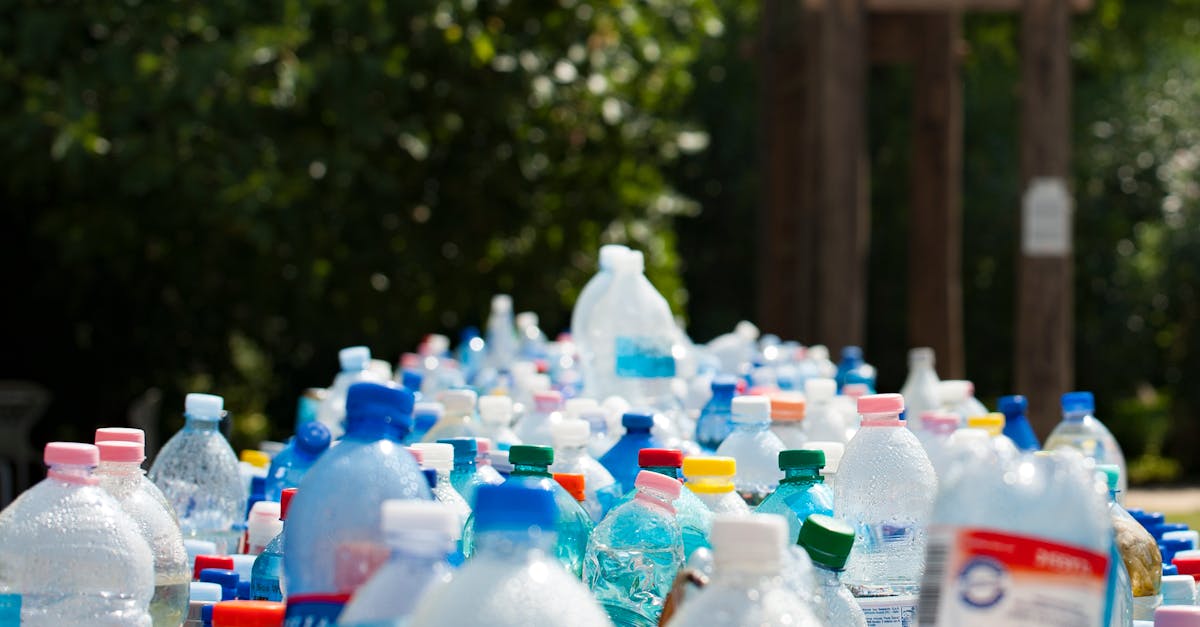
The Truth About Recycling: Why Plastic Pollution Persists

Plastic recycling is often presented as the silver bullet for plastic pollution. The reality is more complex. Recycling matters, but it cannot by itself stop plastic pollution because of technical, economic, behavioral, and systemic limits. This article explains those limits, provides evidence and cases, and outlines complementary strategies that must run alongside recycling to produce real change.Today’s scale: exploring how production, waste, and the true effects of recycling come togetherGlobal plastic output has climbed to more than 350 million metric tons per year in recent times, and a pivotal review of historical production and disposal showed that by 2015 only…
Read More
What’s failing in the global plastics response

Global Plastics Crisis: Why Our Response is Falling Short

Global efforts to address plastics have delivered limited progress, while numerous challenges persist. Production keeps climbing, waste management remains underfunded, policies lean too much on voluntary measures from industry, and many touted technical solutions fail to confront the underlying drivers. Consequently, plastic pollution continues to intensify, fossil-fuel dependencies deepen, and social and environmental damages grow—most acutely in low- and middle-income countries.Failure 1 — Production keeps growing while policy focuses on end-of-lifeThe conversation remains tilted toward waste management and recycling while production of new plastics marches upward. Global production is on the order of hundreds of millions of tonnes per year…
Read More
How tech export controls affect companies and consumers

The Business and Consumer Side of Tech Export Controls

Tech export controls are government rules that restrict the sale, transfer, or sharing of certain technologies across borders. They target items ranging from physical components and finished devices to software, source code, and technical know-how. Governments deploy these controls for national security, economic sanctions, and human rights reasons. The effects are felt across corporate strategies, supply chains, innovation ecosystems, and everyday consumer choices.How export controls functionExport controls operate through several familiar mechanisms:Product and technology classification: governments assign specific codes or categories, such as dual-use or military, that define whether an item needs formal licensing.Licensing and authorization: exporters are required to…
Read More
When carbon capture helps and when it distracts

When Carbon Capture Works

Carbon capture is not a single technology or policy; it is a family of approaches that remove carbon dioxide from flue gases or directly from the air and then either store it permanently underground, use it in products, or inject it in ways that temporarily retain CO2. Whether carbon capture helps or distracts depends on purpose, timing, scale, governance, and economics. Below is a clear assessment of the contexts where carbon capture is a constructive tool and where it creates risks of delay, waste, or greenwashing.How carbon capture can helpDecarbonizing hard-to-abate industries: Cement, steel, chemicals, and some high-temperature industrial processes…
Read More
Why food security remains fragile

Addressing Lingering Food Security Issues

Food security is the condition in which all people, at all times, have physical and economic access to sufficient, safe, and nutritious food. Despite progress in agricultural productivity and declining child mortality in some regions over recent decades, global food security remains fragile. Multiple interacting drivers — environmental, economic, political, social, and technological — continuously undermine availability, access, utilization, and stability of food supplies. The following analysis explains the main causes, illustrates them with cases and data trends, and highlights practical pathways to reduce fragility.Fundamental factors behind fragilityConflict and instability: Armed conflict is the single largest driver of acute food…
Read More
Iranians confront a post-Khamenei reality with relief, disbelief and anxiety

The Post-Khamenei Era: Iranian Perspectives

For the first time in decades, Iranians awoke to a nation no longer led by Ayatollah Ali Khamenei, after coordinated US-Israeli strikes claimed his life, leaving the country facing a profoundly uncertain chapter.Diverse reactions unfolding nationwideThe news of Khamenei’s death has provoked a wide spectrum of reactions across Iran. In the capital and other cities, some citizens expressed cautious relief, viewing the end of his decades-long rule as a potential turning point. Celebrations erupted in certain neighborhoods, with people honking horns, waving clothes, and even toppling monuments associated with the Islamic Republic’s founders. Videos circulating online from cities such as…
Read More