




Table of Contents
- A prize designed to elevate biodiversity on the global agenda
- Global cooperation stands at the core of the initiative
- Recognizing excellence across multiple fields of action
- A decade influenced by the Kunming-Montreal Global Biodiversity Framework
- Building a legacy of global impact
- Community involvement and the selection process
- Looking ahead to 2026 and beyond
As ecosystems face unprecedented pressure, recognizing individuals who drive meaningful change has become essential to sustaining life on Earth. The MIDORI Prize for Biodiversity highlights those efforts and amplifies their impact worldwide.
The global community continues to seek effective ways to halt and reverse biodiversity loss while addressing interconnected challenges such as climate change, food security, and human well-being. Within this context, international recognition initiatives play a crucial role in elevating successful approaches, sharing knowledge, and inspiring action across sectors and borders. One such initiative is the MIDORI Prize for Biodiversity, an international award dedicated to honoring individuals whose work has made a measurable difference in the conservation and sustainable use of the planet’s biological diversity.
The nomination phase for the 2026 edition of the MIDORI Prize for Biodiversity is currently in progress, encouraging the public to put forward individuals whose work demonstrates exceptional leadership, innovative methods, and enduring impact. Entries may be submitted from 2 February to 31 March 2026 through the official platform of the AEON Environmental Foundation. By allowing open participation, the Prize reinforces its commitment to transparency and inclusion, ensuring that valuable contributions from diverse regions and disciplines receive recognition on a global scale.
A prize designed to elevate biodiversity on the global agenda
The MIDORI Prize for Biodiversity was created to underscore the fundamental role that biodiversity plays in sustaining ecosystems and supporting human societies. Healthy biodiversity underpins food systems, regulates climate, protects water resources, and contributes to economic stability and cultural identity. Despite this, biodiversity loss has accelerated in recent decades, driven by habitat destruction, pollution, overexploitation of natural resources, and climate change.
Framed within this context, the Prize serves not only as an honor but also as a means to build awareness, highlighting significant individual initiatives that draw public interest through practical solutions and underscoring that committed leadership can achieve tangible environmental outcomes. By granting this recognition, the Prize helps bridge gaps between scientific understanding, policy development, and on-the-ground implementation, encouraging collaboration across diverse disciplines and sectors.
Since its inception, the Prize has honored individuals whose work spans a wide range of fields, from scientific research and community-based conservation to policy advocacy and environmental education. This diversity reflects an understanding that biodiversity conservation cannot be achieved through isolated efforts, but requires coordinated action that integrates science, governance, and societal engagement.
Global cooperation stands at the core of the initiative
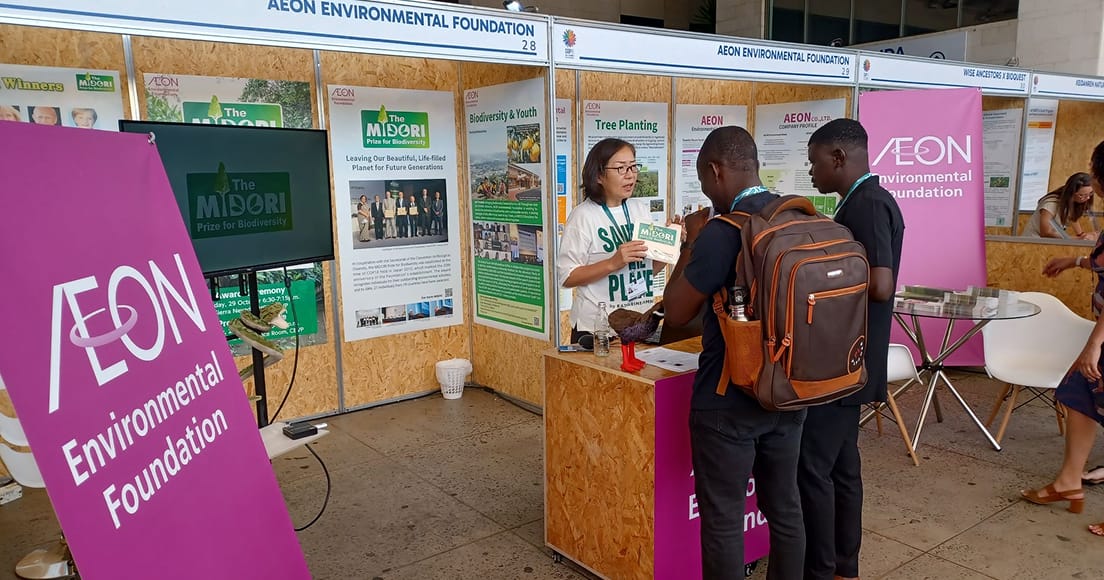
The MIDORI Prize for Biodiversity is jointly presented by the AEON Environmental Foundation and the Secretariat of the Convention on Biological Diversity (CBD), a partnership that brings together a philanthropic organization and a key authority in global environmental governance to ensure the Prize aligns with international biodiversity objectives while remaining firmly rooted in practical, real‑world results.
The Convention on Biological Diversity, adopted in 1992, provides the principal global framework for biodiversity conservation, sustainable use, and the fair sharing of benefits arising from genetic resources. Through its involvement, the CBD Secretariat helps position the MIDORI Prize within broader international efforts, linking individual achievements to collective global goals.
The 2026 Award Ceremony and Award Winners Forum will be held on 27 August 2026 in Tokyo, Japan, gatherings anticipated to strengthen global momentum prior to the seventeenth meeting of the Conference of the Parties to the CBD (COP 17), scheduled to convene in Yerevan, Armenia. COP 17 will take place under the theme “Taking action for Nature,” emphasizing practical delivery and accountability at a crucial moment for worldwide biodiversity commitments.
Recognizing excellence across multiple fields of action
One hallmark of the MIDORI Prize for Biodiversity is its ability to honor outstanding achievements across a range of fields, and instead of centering on a single discipline, the Prize recognizes that meaningful advances in biodiversity conservation rely on complementary efforts that span scientific, social, and political spheres.
Historically, these award categories have covered practical execution, scientific inquiry, and both policy development and public education. Individuals honored for implementation are usually those who transform knowledge into real-world action, delivering conservation outcomes through on-the-ground projects, partnerships with local communities, or responsible resource stewardship. Recipients recognized for science and research deepen insight into ecosystems, species, and ecological processes, providing the evidence needed to guide informed decisions. At the same time, those acknowledged for policy and enlightenment play an essential role in crafting legislation, shaping governance, and elevating public understanding.
This comprehensive approach reflects the intricate nature of biodiversity challenges and stresses that no single route can stand alone. By acknowledging accomplishments across these areas, the Prize fosters dialogue among sectors and underscores the importance of coordinated, integrated strategies.
A decade influenced by the Kunming-Montreal Global Biodiversity Framework
The significance of the MIDORI Prize has steadily increased alongside the adoption of the Kunming-Montreal Global Biodiversity Framework (KMGBF), approved during the fifteenth meeting of the Conference of the Parties to the CBD in 2022. This Framework serves as a worldwide roadmap designed to stop and reverse biodiversity decline by 2030, outlining 23 practical targets aimed at confronting the main causes of ecological degradation while advancing sustainable use and fair benefit-sharing.
Achieving the ambitions of the KMGBF requires a whole-of-society approach, involving governments, the private sector, civil society, Indigenous Peoples, local communities, and individuals. The MIDORI Prize directly supports this vision by recognizing individuals who embody leadership and innovation in advancing these objectives. In doing so, it helps translate the Framework’s targets into visible examples of progress, making abstract goals more tangible and relatable.
As the 2030 deadline approaches, the urgency to scale meaningful solutions becomes increasingly clear, and recognition initiatives such as the MIDORI Prize can accelerate this momentum by highlighting successful strategies and encouraging their implementation in a wide range of contexts.
Building a legacy of global impact
Since it was established during the International Year of Biodiversity in 2010, the MIDORI Prize for Biodiversity has recognized 21 individuals from 20 countries. This geographic diversity underscores the global nature of biodiversity challenges and the universal relevance of conservation efforts. From tropical forests and coral reefs to urban ecosystems and agricultural landscapes, the work of past recipients demonstrates that impactful action can take many forms.
The legacy of the Prize reaches well beyond honoring individuals, as its award ceremonies and related forums create spaces for exchanging knowledge, building networks, and encouraging collaboration, allowing winners to discuss their experiences and learn from each other. Such interactions nurture a worldwide community of practice committed to biodiversity conservation and sustainable development.
Moreover, public recognition can enhance the visibility and credibility of awardees, supporting their ability to secure funding, influence policy, and expand their initiatives. In this way, the Prize acts as a catalyst, multiplying the impact of individual efforts and contributing to broader systemic change.
Community involvement and the selection process
By inviting nominations from members of the public, the MIDORI Prize reinforces the idea that biodiversity conservation is a shared responsibility. This open approach allows communities, organizations, and individuals to highlight work that might otherwise remain under-recognized, particularly in regions or sectors with limited visibility.
The nomination window for the 2026 Prize extends from 2 February to 31 March 2026, during which entries are evaluated using criteria that highlight measurable results, inventive approaches, and consistency with global biodiversity goals. By following this review process, the Prize aims to recognize individuals whose work provides meaningful insights and motivates others engaged in the same field.
Public participation in the nomination process also plays an educational role, fostering broader understanding of biodiversity challenges and the individuals working to tackle them. As people explore prospective nominees and their efforts, they gain a clearer view of the practical initiatives that reinforce environmental sustainability.
Looking ahead to 2026 and beyond
As worldwide focus shifts toward COP 17 and the continued rollout of the Kunming-Montreal Global Biodiversity Framework, initiatives such as the MIDORI Prize for Biodiversity take on ever greater significance, sustaining momentum, highlighting achievements, and reminding the international community that individual leadership continues to be a powerful catalyst for transformation.
The 2026 Award Ceremony and Award Winners Forum in Tokyo are anticipated to offer a space for thoughtful exchange and discussion at a crucial moment for biodiversity governance, and by bringing together award recipients, policymakers, scholars, and practitioners, these events will nurture shared insight and underscore the urgent importance of coordinated action.
Across the decade poised to define the planet’s biological diversity, recognizing and supporting those who set the benchmark becomes not just symbolic but a strategic pledge to the ideas, practices, and partnerships vital for safeguarding nature now and in the future. The MIDORI Prize for Biodiversity stands as compelling proof of the impact that committed individuals can achieve when their work is acknowledged, amplified, and connected to global sustainability efforts.