

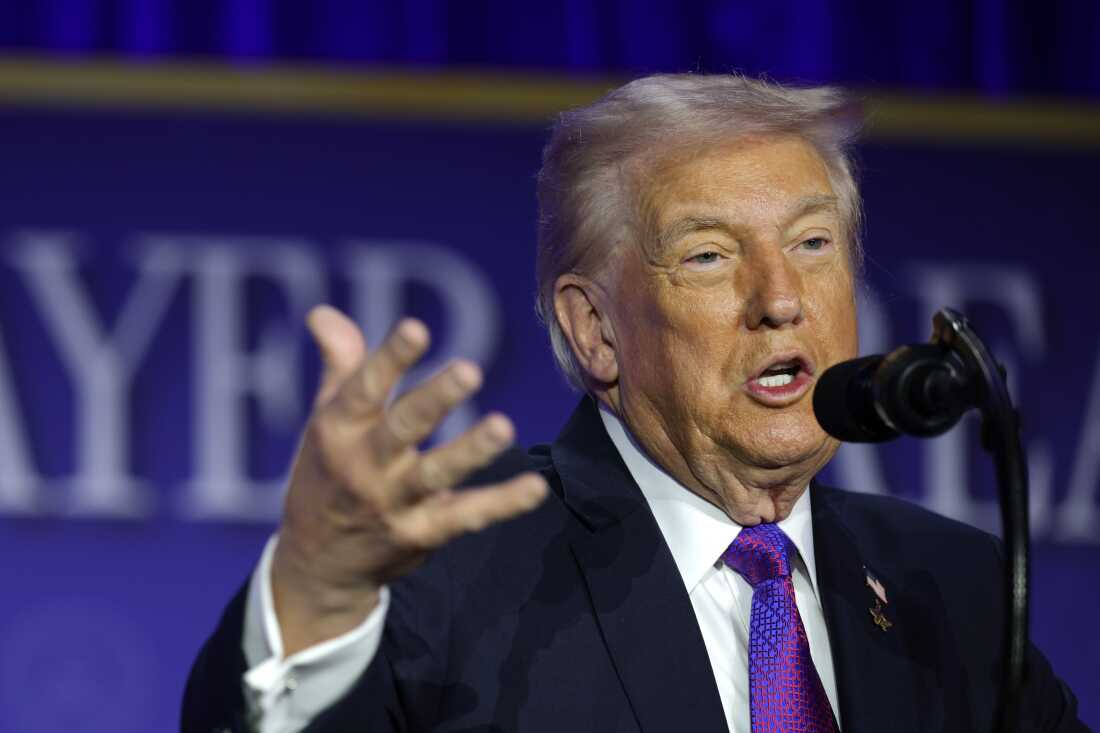
The international framework that has supported decades of relative stability is under growing strain, with a new global security assessment cautioning that forceful political upheaval, largely propelled by US leadership, is hastening the decline of established rules, alliances, and collective norms.
According to the Munich Security Report 2026, the world is now experiencing what it labels “wrecking-ball politics,” a governing style in which forceful disruption takes precedence over stability and collective agreement, and the report contends that this shift is putting unprecedented pressure on the postwar international order, exposing it to its most significant challenges since its inception and generating repercussions that reach far beyond conventional geopolitical competition.
Released just before the annual Munich Security Conference, the report delivers a stark assessment of today’s global landscape. It points to US President Donald Trump as the primary force challenging the pillars of the current international order, depicting his approach to governance as a sharp departure from decades of US-supported multilateral cooperation. Instead of upholding institutions meant to navigate conflict and foster collaboration, the report argues that current US policy is actively eroding them.
A regulatory framework confronting unparalleled upheaval
The international system formed after 1945 was designed to avert renewed large‑scale warfare, encourage economic interdependence, and establish frameworks for shared security, and over the decades it broadened through institutions like the United Nations, NATO, the World Trade Organization, along with an extensive network of agreements and alliances that contributed to steadier relations among major powers.
The Munich Security Report argues that this framework is now under direct threat. It states that more than eight decades after construction began, the system is no longer merely under pressure but is actively being dismantled. The language used is unusually blunt for a document traditionally rooted in diplomatic analysis, reflecting the authors’ assessment that incremental erosion has given way to deliberate disruption.
Central to this argument is the characterization of Trump as one of the leading “demolition men” of the global order. The report does not frame this disruption as accidental or reactive, but as a defining feature of a political approach that views existing rules as obstacles rather than safeguards. In this context, international agreements are treated as transactional tools, valued only insofar as they deliver immediate advantage.
This transition, the report cautions, could swap principled collaboration for improvised arrangements that prioritize immediate benefits at the expense of lasting stability, creating conditions that erode predictability, strain trust among partners, and complicate unified efforts to address global challenges.
The tone established in Washington and its wider reverberations
The report places the present moment against the wider backdrop of the second Trump administration, underscoring a sequence of moves and remarks that have shaken long-standing partners. One of the first indicators emerged at the previous Munich Security Conference, where US Vice President JD Vance gave a speech strongly rebuking European leaders.
Vance’s address, delivered just weeks into the administration, challenged Europe on issues such as migration and free expression, arguing that the continent’s greatest threats originated internally rather than from external adversaries. The remarks surprised many in the audience and were widely interpreted as a departure from the cooperative rhetoric typically associated with transatlantic relations.
According to the report, that address became an early sign of the tumultuous year ahead. Later policy decisions featured the enforcement of harsh tariffs on key European partners, reflecting a readiness to turn economic relationships into leverage. Even more notable were remarks hinting at potential US military action to take control of Greenland, a territory of NATO ally Denmark, an idea that sent ripples of alarm through diplomatic circles.
The report also highlights what it characterizes as a deferential approach toward Russia amid its invasion of Ukraine, a stance that, it contends, has placed additional pressure on alliances and sparked skepticism about the dependability of US commitments to collective defense and international law.
Collectively, these measures form what the report describes as a wider trend: leveraging power to refashion the global landscape with little consideration for established norms or the interests of long-time partners.
A world drifting toward transactional politics
One of the Munich Security Report’s primary cautions is that the present course could produce a global order largely shaped by transactional dealings, where cooperation is steered not by shared principles or mutual duties but by immediate calculations of gain.
The report indicates that this strategy tends to advantage actors wielding substantial economic and military power, leaving smaller states and communities that depend on stable rules for security and opportunity increasingly sidelined. Those quoted in the report warn that such a transition could shape a global landscape tailored mainly to the priorities of the affluent and influential, instead of responding to the wider needs of societies grappling with economic and social pressures.
Rather than posing an abstract hypothesis, this concern is tied directly to clear shifts in public sentiment and political conduct across various regions, where declining trust in institutions and enduring inequalities have left many people doubtful that governments are capable of providing meaningful answers.
The report argues that disruptive leadership styles may initially resonate with voters who feel excluded or ignored. Over time, however, the erosion of cooperative frameworks risks deepening the very problems that fuel discontent, including economic insecurity, inequality, and declining social mobility.
Public sentiment reflects growing pessimism
To support its analysis, the Munich Security Report draws on public opinion surveys conducted across a wide range of countries. The findings point to a pervasive sense of anxiety about the future, with many respondents expressing doubts about their governments’ ability to improve living standards or address structural challenges.
Issues like the growing cost of housing, widening inequality, and stagnant wages stand at the center of these worries, and many respondents feel that existing policies may ultimately leave future generations in a more difficult position, a view that reflects a deeper erosion of faith in sustained long-term advancement.
The data indicate that pessimism runs especially high across several European nations, with most respondents in France believing that government actions will disadvantage rather than support future generations, a sentiment echoed by over half of those surveyed in the United Kingdom and Germany, while in the United States the proportion was lower though nearly half of participants still expressed this concern.
The report interprets these results as evidence of a growing sense of individual and collective helplessness. Rather than viewing political change as a pathway to improvement, many people now associate it with instability and decline.
Delegating accountability in an unpredictable setting
Notably, the surveys also examined how people assign responsibility for this grim outlook, and when respondents across several countries were asked whether the US president’s policies serve the world’s interests, many indicated they did not agree.
Across the United States, Canada, major European economies, Japan, Brazil, and South Africa, at least half of respondents stated they somewhat or strongly disagreed with the idea that current US leadership is having a positive influence globally. This broad skepticism indicates that concerns about US policy stretch beyond traditional critics and resonate across varied political and cultural landscapes.
The report stops short of attributing all global challenges to a single leader. However, it emphasizes that the scale of US influence magnifies the effects of its policy choices. When the world’s most powerful country signals indifference or hostility toward established norms, the consequences reverberate throughout the international system.
This dynamic, the report argues, creates incentives for other actors to adopt similarly transactional or unilateral approaches, accelerating the breakdown of cooperative structures.
The Munich Security Conference at the center of attention
The report’s publication aligns with preparations for the Munich Security Conference, the annual event that gathers heads of state, ministers, military officials, and security specialists from across the globe. Set to take place over three days in Munich, the conference is anticipated to welcome more than 50 national leaders, emphasizing its importance as a central venue for high‑level strategic discussions.
Although the conference has long functioned as a venue for reiterating mutual commitments, this year’s dialogue is poised to unfold amid heightened uncertainty and strain, with issues highlighted in the report – particularly the resilience of alliances and the trajectory of multilateral institutions – likely to steer much of the agenda.
US President Trump will not attend the conference. Instead, the United States will be represented by Secretary of State Marco Rubio and a large congressional delegation. According to conference organizers, more than 50 members of Congress are expected to participate, signaling continued engagement even in the absence of the president himself.
The report indicates that while representation at this level keeps communication channels open, it also underscores how the president’s absence carries symbolic weight at a time when strong leadership and reassurance are urgently needed.
An international order standing at a pivotal juncture
The Munich Security Report refrains from treating its conclusions as fixed or unchangeable, presenting the present phase instead as a pivotal juncture where decisions by major stakeholders are poised to influence global security’s direction for many years.
The authors argue that while the post-1945 order has always evolved, its survival has depended on a shared understanding that rules and institutions serve collective interests. Undermining those structures, even in the name of national advantage, risks creating a more volatile and unequal world.
At the same time, the report acknowledges that the existing system has not delivered prosperity or security equally. Addressing legitimate grievances, it suggests, requires reform rather than destruction. Strengthening institutions to better reflect contemporary realities may be more effective than abandoning them altogether.
As debates unfold in Munich and beyond, the challenge for global leaders will be to balance domestic pressures with international responsibilities. The report’s warning is clear: a world governed solely by power and transactions may offer short-term gains for some, but it carries long-term risks for all.
By bringing these dynamics to the forefront, the Munich Security Report 2026 delivers not only an assessment of today’s leadership, but also a wider consideration of how delicate the international order has become. Whether that order evolves, breaks apart, or is replaced by something entirely different will hinge on choices being taken now, at a time shaped by volatility, ambiguity, and conflicting ideas about the future.