

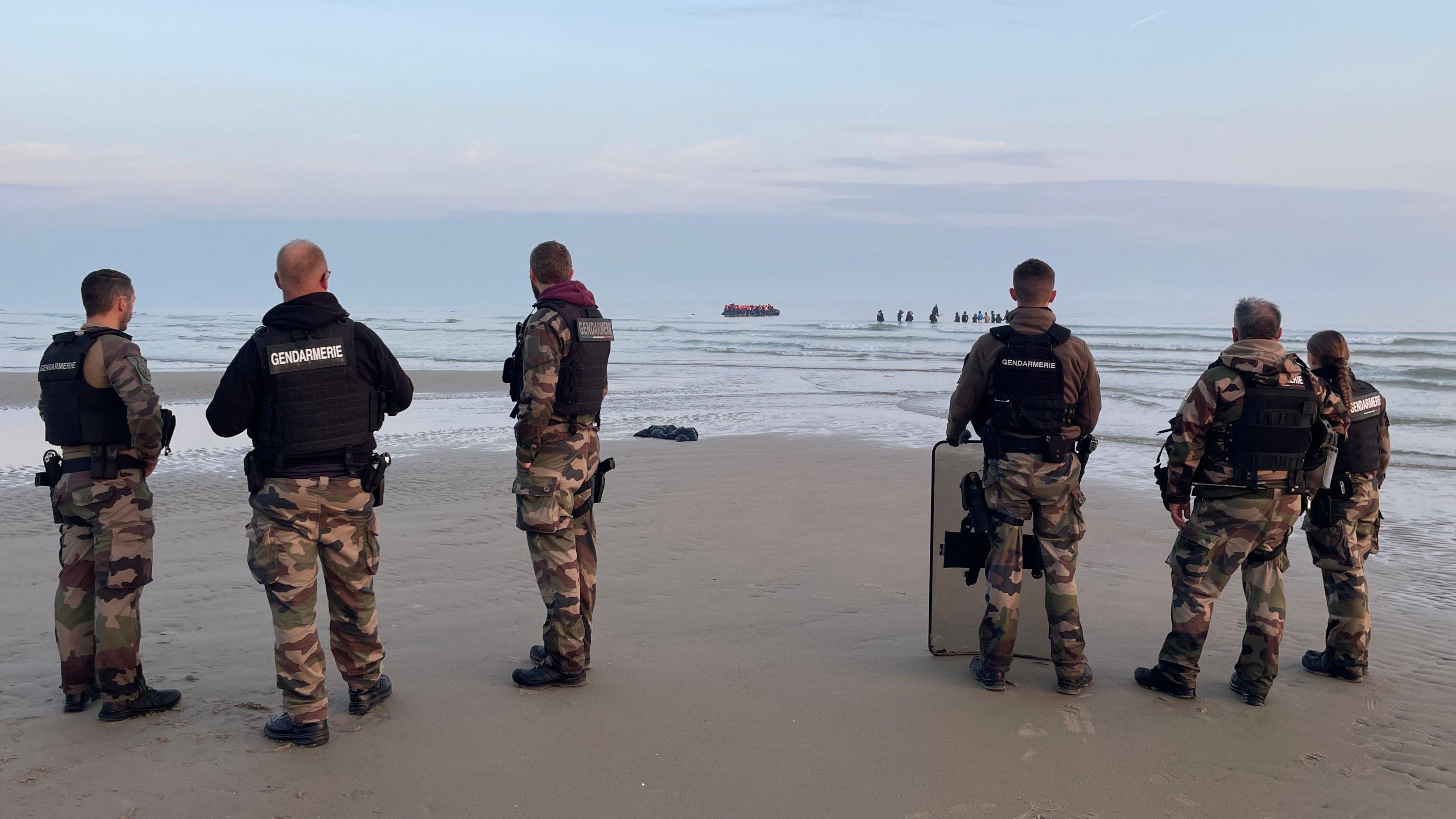
On the breezy shores of northern France, police officers recently thwarted a small boat from setting off towards the United Kingdom, in a continued effort to tackle the complicated problem of migrant crossings in the English Channel. This operation, conducted in the early morning, underscores the ongoing challenge European authorities encounter in handling unauthorised migration along this closely watched expanse of seashore.
The vessel in discussion, referred to by authorities as a “taxi-boat” because of its function in transporting migrants across the Channel, was impounded before embarking. Authorities acted swiftly near a familiar embarkation site commonly utilized by individuals attempting the perilous trip from France to the UK seeking refuge or improved prospects. Police, some equipped with riot gear, acted quickly to cut and incapacitate the inflatable vessel, making it inoperative.
This action reflects the intensified efforts by French authorities to disrupt the organized networks that facilitate these crossings. The crossing of the English Channel by small boats has surged in recent years, becoming a focal point of political debate, humanitarian concern, and international cooperation between France and the UK. Despite agreements and enhanced border patrols, the number of individuals risking the journey remains high.
The individuals participating in these crossings frequently originate from areas plagued by conflict or financial hardship throughout Africa, the Middle East, and Asia. A significant number have already faced daunting voyages before arriving at the northern coast of France. To them, the Channel signifies the last hurdle in an extended pursuit of security, stability, or better economic prospects. Nonetheless, the waters separating France and the UK are treacherous, and many have perished in unsuccessful efforts to navigate this passage.
Enforcement measures like the recent capture of a boat seek to discourage these crossings by focusing on the transportation methods. Inflatable vessels—frequently unstable, crowded, and unsuitable for the perilous waters—are the main technique employed by traffickers to move migrants. By deflating the boats prior to departure, officials aim to stop these risky voyages and convey a warning to smuggling networks along the shore.
The British Broadcasting Corporation (BBC), on-site to cover the event, photographed French police executing the task amidst difficult weather. The media’s involvement highlights the significant attention the migrant situation receives and the public examination of governmental actions. The pictures of damaged vessels and relocated migrants emphasize the human impact of this persistent challenge.
Las autoridades francesas han sostenido que sus medidas cumplen con los marcos legales diseñados para proteger vidas y preservar el orden. Destacan que detener los cruces en embarcaciones inseguras no solo evita posibles tragedias en el mar, sino que también interrumpe las redes criminales que se lucran de personas vulnerables. No obstante, estas acciones generan polémica. Organizaciones de derechos humanos han cuestionado las tácticas, argumentando que las estrategias de prevención aportan poco en cuanto a abordar las causas fundamentales que llevan a las personas a emprender estos peligrosos viajes.
The UK and France have been working in tandem to address the situation, with both governments investing in increased surveillance, border security, and intelligence-sharing. Patrols along the French coast have expanded, and additional resources have been allocated to monitor the waters more effectively. Despite these efforts, crossings have continued, fueled by factors such as political instability, poverty, and limited access to legal migration routes.
Critics argue that deterrence measures alone are insufficient to stem the tide of Channel crossings. They advocate for more comprehensive solutions, including the creation of safe and legal pathways for asylum seekers, greater cooperation on resettlement programs, and broader diplomatic efforts to address conflicts and economic disparities in migrants’ countries of origin.
For the individuals directly impacted—those who have fled violence, persecution, or extreme hardship—the destruction of a boat represents yet another setback in a journey marked by danger and uncertainty. Many are forced to return to makeshift camps in and around Calais and Dunkirk, where living conditions remain harsh and resources scarce. These camps, often dismantled by authorities, reflect the persistent limbo in which thousands of displaced people find themselves.
The charitable aspect of the Channel emergency remains a significant concern for advocacy organizations and global monitors. Preventing dangerous crossings is crucial for saving lives, yet numerous voices contend that approaches should also focus on respecting human dignity, safeguarding rights, and ensuring access to just asylum processes. The image of officers cutting boats, even though aimed at preventing catastrophe, highlights the utter despair of those who perceive no other feasible method to find safety.
In the UK, there is ongoing controversy about how to handle the rise in small boat arrivals. Authorities have proposed laws intended to toughen the procedures for asylum and raise punishments for illegal entry, alongside committing to accelerate deportations. These measures have led to legal disputes and disapproval from human rights groups, cautioning that these methods could breach global responsibilities to safeguard refugees.
Los cruces por el Canal son representativos de un desafío migratorio más amplio a nivel global, en el cual el desplazamiento debido a conflictos bélicos, cambios climáticos y dificultades económicas está incrementándose. En toda Europa, los países están luchando por encontrar un equilibrio entre la seguridad fronteriza y las responsabilidades humanitarias. La situación en la costa norte de Francia representa solo un capítulo de esta narrativa más extensa y compleja.
Meanwhile, French officials have reiterated their pledge to stop unauthorized departures while urging ongoing cooperation with the UK. More resources, such as funding, technology, and personnel, have been allocated to dismantle smuggling networks that change and develop to evade enforcement actions. Despite these measures, the crossings continue, highlighting the persistence and desperation of individuals striving to arrive at British shores.
For migrants, the trip is frequently seen as their final option. Numerous individuals find themselves with no alternatives after being refused asylum in other places or experiencing exploitation in different nations. Their resolve to attempt the perilous passage highlights the challenges they have faced and the aspirations they continue to harbor.
As the issue continues to unfold, there is growing recognition that short-term enforcement solutions must be coupled with longer-term strategies that address the root causes of displacement. This includes supporting conflict resolution, development aid, and fairer international asylum systems. Without such measures, the cycle of dangerous crossings, enforcement crackdowns, and human suffering is likely to continue.
The recent interception of the boat on the French coast serves as a stark illustration of the ongoing struggle to manage migration in the Channel. It is a story marked by complex legal, political, and humanitarian challenges—one that calls for a response that goes beyond deterrence to address the deeper forces driving people to risk everything for the hope of a better life.